What happens to restaurant access when someone quits mid-shift



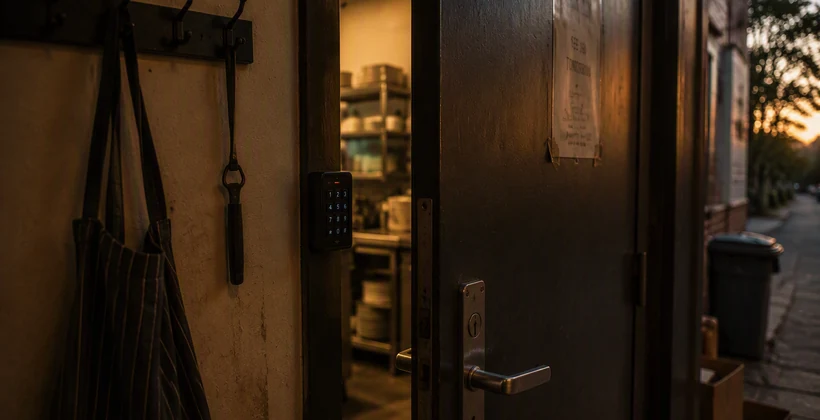
Restaurant turnover is high enough that it barely registers as unusual. Someone walks out mid-shift, doesn't come back the next day, or gets let go on the spot. The food still needs to get served that night. Access to the building is usually the last thing anyone thinks about in the moment.
Why the door doesn't get handled
Changing a shared code means telling everyone who still needs it, which is its own hassle in the middle of a shift. So it often just doesn't happen, at least not right away. The former employee still technically has the same access as everyone still on the schedule.
How long this actually lasts
Longer than anyone would guess if asked directly. A code changes when someone finally notices, which in a busy restaurant might be weeks, or might be never, if the code simply gets replaced by an equally long-lived one down the road.
Stay connected to the latest in access control
Get insights on hardware, integrations, and operations delivered to your inbox.
What instant deactivation actually looks like
When access is tied to an individual credential instead of a shared code, removing one person's access takes seconds and affects nobody else. Everyone still on the schedule keeps working. The person who left keeps nothing.
Why this matters more in restaurants than most industries
Turnover rates in restaurants are higher than almost any other industry, which means this scenario isn't a rare edge case. It's a routine event that happens often enough to deserve a system, not a one-off fix each time. Hogsalt's move toward individual, revocable credentials reflects exactly this kind of operational reality.
The part that's easy to miss
It isn't only about a disgruntled departure. Most staff turnover is completely ordinary, someone moves, takes a different job, goes back to school. Access that already follows the schedule makes this a non-event: the moment someone's off the schedule for good, their access is already gone with it.
What this means for the manager on duty
A manager already dealing with a mid-shift departure has enough to handle without also being responsible for remembering, hours or days later, to close off access. Instant deactivation removes that item from an already long list, quietly, without requiring a follow-up task at all.
It also removes a source of low-grade anxiety that many operators carry without naming it directly: the sense that access has probably drifted out of sync with who's actually still on staff, somewhere, at some location, without anyone being sure exactly where.
What this looks like over a full year
A single restaurant with typical turnover might go through this scenario a dozen or more times annually. Multiply that across a group with several locations, and the number of moments where access could quietly drift out of sync with staffing becomes large enough that it deserves a system, not individual attention each time it happens.
Treating this as routine, rather than an exception to handle manually, is really the whole shift in thinking. Turnover isn't going away in this industry. The access system just needs to expect it.
What this means for hiring, too
The same system that makes offboarding instant also makes onboarding simple. A new hire's first shift can come with access that's already scoped correctly, rather than waiting on someone to manually share a code once they've proven themselves for a few weeks.
Over a full year, the difference between manually managing this and automating it isn't measured in any single incident. It's measured in the accumulated hours a manager didn't have to spend tracking down who still had a code they shouldn't.
It's a small operational change with an outsized effect on peace of mind, particularly for owners and managers who've spent years assuming this kind of drift was simply part of running a restaurant.
This same instant-deactivation logic is worth pairing with how vendor access gets handled. Scheduled vendor access solves a related problem: making sure it isn't only staff credentials that update in real time.
See it in action
See how individual credentials make staff turnover a non-event at the door.

RemoteLock has been automating access control and improving on-site property operations efficiencies across multiple industries, including vacation rental and multifamily, for more than ten years. As a leading access-centered property operations software platform provider with more than 10,000 customers in 75+ countries, RemoteLock helps property managers enable, control, and automate access and climate control across their portfolio. RemoteLock’s platform saves property managers time and money through the elimination of tasks for onsite staff and helps scale businesses with greater confidence. It is differentiated by its dozens of integrations with applicable hardware and business software systems for an easy-to-use, turn-key solution.
Access that Works Everywhere
One flexible platform built to support modern properties, no matter who needs access or how your portfolio scales

Interested in learning more?
Explore blogs, webinars, and videos related to what you just read

When the internet drops, your guest still needs to get in
Makerspaces, conference rooms, and the access problem libraries didn't used to have

How independent hotels compete on guest experience without a big-brand budget