The 6am delivery problem: giving vendors access without giving up control



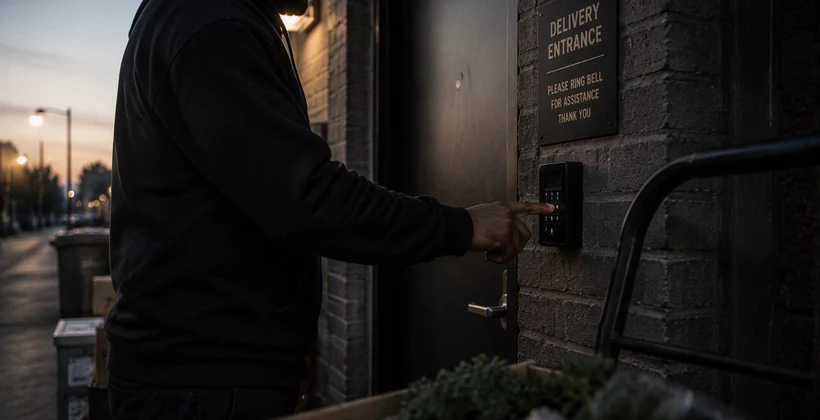
The produce delivery shows up at 6am. The linen service comes Tuesdays before open. The HVAC tech is scheduled for whenever they can fit it in. None of these vendors keep restaurant hours, and none of them wait around for someone to let them in.
The usual workaround
Most restaurants solve this the same way: a hidden key, a lockbox by the back door, or a code that gets handed out once and never changes. It works, in the sense that deliveries get made. It also means nobody really knows who has access anymore, or when they last used it.
Why this is harder to fix than it sounds
Vendor schedules aren't as predictable as staff schedules. A delivery window shifts by an hour. A repair gets rescheduled. Managing this by hand means constantly updating a code or tracking down a spare key, which is exactly the kind of task that quietly stops happening once things get busy.
Stay connected to the latest in access control
Get insights on hardware, integrations, and operations delivered to your inbox.
Scheduled access instead of a standing key
Vendor access can be scheduled the same way staff shifts are: a window that opens and closes on its own, tied to when the vendor is actually expected. A produce delivery gets access from 5:45 to 6:15am, every weekday, without a manager setting it up fresh each time.
What this solves that a lockbox doesn't
Automating vendor access means a vendor who no longer serves the restaurant loses access automatically, instead of quietly keeping a key that was supposed to have been returned. It also means there's a real record of when someone actually came and went, not just an assumption based on the delivery schedule.
What multi-location groups run into
The problem multiplies fast for restaurant groups running several locations, each with its own set of vendors and its own version of the same informal workaround. Hogsalt's shift toward centralized access covers exactly this kind of scaling problem: vendor and staff access that used to be managed one location at a time, now handled from a single place.
What this looks like for a small independent kitchen
A single-location restaurant doesn't need an elaborate system to benefit from this. Even one recurring vendor relationship, a produce supplier or a linen service, is worth moving off a shared code and onto scheduled access, since it removes one more thing an owner has to remember to manage by hand.
The same logic extends to one-time visits: a repair tech coming for a single appointment doesn't need a key cut or a code shared. A time-boxed credential covers exactly that one visit and nothing beyond it, which is a meaningfully different risk profile than handing out a permanent code for a one-time need.
Getting vendors comfortable with the change
Vendors themselves tend to prefer this once they understand it. A driver who used to hunt for a hidden key or remember a shared code gets a straightforward credential that simply works during their expected window, which is one less thing for them to manage across the dozen or more stops they make in a single morning.
It's worth communicating the change clearly the first time a vendor's access moves to this system, since a driver expecting the old lockbox and finding it gone can otherwise assume something's wrong rather than realizing the process simply improved.
A reasonable place to start
Rather than converting every vendor relationship at once, start with the one that causes the most friction today, often the earliest or most frequent delivery. Proving out the approach there makes the rest of the rollout a matter of repetition rather than a fresh decision each time.
This same scheduled approach is worth applying consistently across a growing group. Managing access centrally across multiple restaurant locations covers what that looks like once vendor access needs to work the same way at every address.
Get started
See how scheduled vendor access replaces the lockbox by the back door.

RemoteLock has been automating access control and improving on-site property operations efficiencies across multiple industries, including vacation rental and multifamily, for more than ten years. As a leading access-centered property operations software platform provider with more than 10,000 customers in 75+ countries, RemoteLock helps property managers enable, control, and automate access and climate control across their portfolio. RemoteLock’s platform saves property managers time and money through the elimination of tasks for onsite staff and helps scale businesses with greater confidence. It is differentiated by its dozens of integrations with applicable hardware and business software systems for an easy-to-use, turn-key solution.
Access that Works Everywhere
One flexible platform built to support modern properties, no matter who needs access or how your portfolio scales

Interested in learning more?
Explore blogs, webinars, and videos related to what you just read

When the internet drops, your guest still needs to get in
What actually happens when a patron reserves a study room
The maintenance request that never gets logged