How independent hotels compete on guest experience without a big-brand budget



A big hotel brand can throw a large front-desk team, a dedicated app, and a full IT department at the guest experience problem. An independent property with twenty rooms and a lean staff doesn't have any of that, and guests don't particularly care. They still expect the arrival to feel effortless.
Where the expectation gap actually shows up
It's rarely the room itself. Independent properties often out-design the big chains on character and charm. Where the gap shows up is in the mechanics of arrival: check-in lines, key handoffs, a front desk that isn't staffed at 11pm when a guest's flight finally lands.
The good news for smaller properties
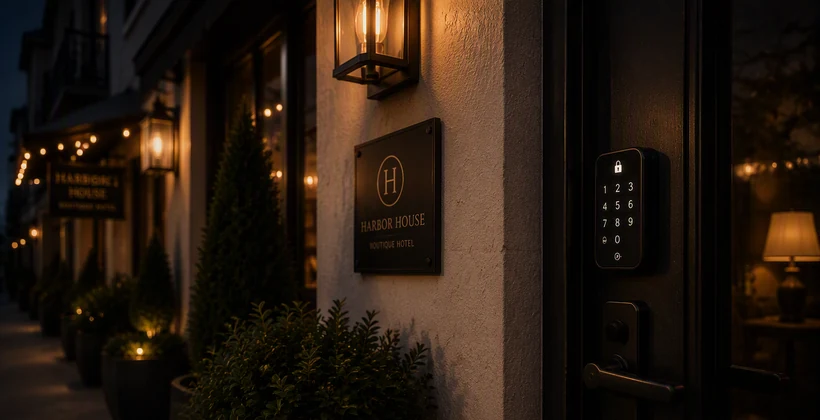
The technology that used to require a big IT budget doesn't anymore. Contactless check-in and self-service access are available to a single boutique property the same way they're available to a national chain, without the chain's overhead.
Independent hospitality insights, straight to your inbox
Subscribe for practical operations guidance built for boutique hotels and independent properties.
What a seamless arrival actually requires
A guest whose access is tied directly to their reservation doesn't need a front desk open at all hours. They arrive, their credential is already active for their exact stay window, and the interaction that used to require a staffed lobby simply doesn't happen anymore.
Where independent properties actually have an advantage
Smaller properties can move faster than a chain weighed down by brand standards and legacy systems. Thatch's experience modernizing guest access shows what this looks like in practice: a property that competes less on scale and more on how well it actually runs.
It's not just about check-in
The same self-service approach extends to amenity spaces, gyms, and common areas, all without adding staff. What to automate and what to keep human at the front desk is worth revisiting here: automating the mechanical parts of arrival is exactly what frees up a lean team to focus on the parts that actually make a stay memorable.
What guests actually notice
Guests rarely comment on the technology behind a smooth arrival, they just notice when arrival feels smooth. That's arguably the point: the goal isn't to impress someone with a gadget, it's to remove the friction points that would otherwise stand between them and settling into their stay.
For a smaller property, this also changes what a lean staff spends their time doing. Instead of managing key handoffs and front-desk coverage around the clock, the same small team can focus on the parts of hospitality that actually require a person: a recommendation, a fix, a genuine conversation.
What this doesn't require
None of this requires a property to abandon what makes it feel independent in the first place. A handwritten welcome note, a genuinely helpful staff member, a building with actual character, none of that competes with technology. If anything, removing the friction around arrival makes more room for exactly those details to stand out.
The properties that get this right tend to treat technology as something that runs quietly in the background, not something guests are meant to notice or comment on. The goal was never to seem high-tech. It was to seem effortless.
A realistic first step
Properties don't need to overhaul everything at once. Starting with contactless check-in for a single room type, or a single amenity space, gives staff and guests a chance to get comfortable with the change before it becomes the property's default way of operating.
It's also worth remembering that guests increasingly expect this kind of experience from any property they book, independent or not. Meeting that expectation isn't really optional anymore, it's quickly becoming the baseline guests assume before they even arrive.
The properties that adopt this earliest tend to have an advantage that's hard to replicate later: reviews and reputation built around exactly this kind of seamless arrival, well before it became table stakes across the wider market.
The same self-service approach becomes especially valuable during the property's most demanding stretches. Holiday staffing shortages are one clear example of where this kind of automation earns its keep.
Talk to our team
See how independent properties deliver a seamless arrival without a big-brand budget.

RemoteLock has been automating access control and improving on-site property operations efficiencies across multiple industries, including vacation rental and multifamily, for more than ten years. As a leading access-centered property operations software platform provider with more than 10,000 customers in 75+ countries, RemoteLock helps property managers enable, control, and automate access and climate control across their portfolio. RemoteLock’s platform saves property managers time and money through the elimination of tasks for onsite staff and helps scale businesses with greater confidence. It is differentiated by its dozens of integrations with applicable hardware and business software systems for an easy-to-use, turn-key solution.
Access that Works Everywhere
One flexible platform built to support modern properties, no matter who needs access or how your portfolio scales

Interested in learning more?
Explore blogs, webinars, and videos related to what you just read

When the internet drops, your guest still needs to get in
The 6am delivery problem: giving vendors access without giving up control
What actually happens when a patron reserves a study room