Doing more with less: how vacation rental managers scale without scaling headcount



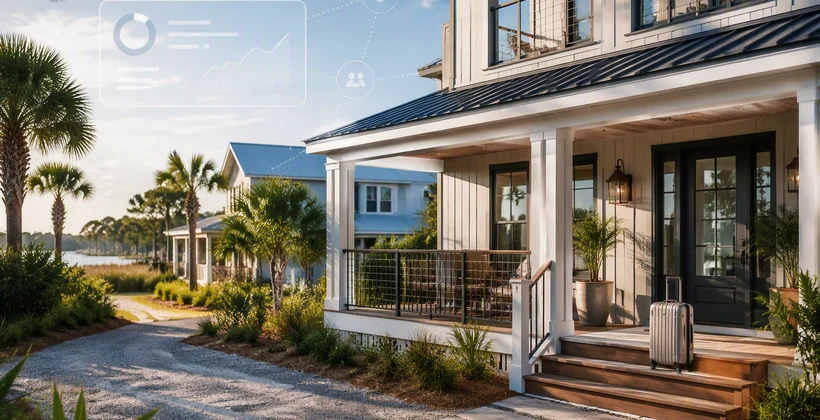
The math used to be simple for vacation rental managers: more properties meant more staff hours, roughly in a straight line. Ten properties needed one full-time coordinator. Twenty needed two. Thirty needed a small team, plus overtime during peak season. Managers who've broken that line in half didn't do it by working faster or hiring more efficiently. They did it by removing tasks that never needed a person in the first place.
Where the hours actually go
Not toward guests, usually. A tech stack that's holding a business back tends to eat time in the same places: manual code changes between guests, reconciling bookings across systems that don't talk to each other, and answering the same access questions over and over. A property manager checking five different dashboards to confirm a single reservation isn't managing a portfolio. They're managing software.
Ask most operators where their team's time actually goes and the answer rarely matches the job description. Coordinators hired to build guest relationships spend their mornings generating door codes by hand. Ops managers hired to plan for growth spend their afternoons untangling a booking that shows up correctly in the PMS but never made it to the lock.
What breaks first as a portfolio grows
Manual access starts to fail well before a portfolio feels large by any objective measure. The tasks that were manageable at ten properties become the bottleneck at thirty, and the failure mode is rarely dramatic. It's a code that didn't get updated before a guest arrived late at night. It's a cleaner locked out because nobody remembered to extend their access after a same-day turnover. Each one is small. Together, they're the reason growth starts to feel like risk instead of opportunity.
The real cost of doing it by hand
The hours are the visible cost. The harder one to see is what a team stops doing to make room for them. Every code changed manually is an hour not spent on a guest issue that actually needed a person, or on the kind of pricing and inventory work that grows revenue instead of just maintaining it. Operators who track this closely often find that manual access work isn't a small tax on their time. It's one of the largest, least planned-for line items on a coordinator's calendar.
More guest experience insights, straight to your inbox
Subscribe for tactics on automation, upsells, and operations built for short-term rental teams.
What gets automated
Guest access tied directly to the booking, so nobody's manually generating or emailing a code. Turnover and vendor access that expires on its own, without a manager remembering to revoke it. Reporting that pulls from one system instead of being stitched together by hand across spreadsheets and PMS exports. Integrations that actually make the job easier are what let a small team support a growing portfolio without burning out trying to keep up with it.
None of this requires a bigger team to run. It requires the systems already in place, the PMS, the access control platform, the payment processor, to share information automatically instead of waiting for someone to enter it twice.
What that looks like in practice
Mid-Florida Home Management grew their portfolio significantly without growing their team at the same pace, by centralizing exactly this kind of manual work. Read more about how one vacation rental company scales smarter with RemoteLock. The pattern holds across advanced growth strategies for vacation rental pros more broadly: growth doesn't have to mean a proportional headcount increase, and the operators seeing the biggest gains are usually the ones who automated earliest, not the ones who hired fastest.
Where to start
Most teams don't need to automate everything at once. The highest-value place to start is usually the task that repeats the most often and carries the least judgment call. Guest code generation is a common first move, since it's high-volume, rule-based, and tied to a reservation that already exists in the PMS. Turnover access and vendor scheduling tend to follow once the first piece is working reliably. The goal isn't a fully hands-off operation. It's a team that spends its time on the decisions that actually need a person, and lets the software handle the ones that don't.
See it in action
See how automated access and reporting let a lean team manage a growing portfolio.

RemoteLock has been automating access control and improving on-site property operations efficiencies across multiple industries, including vacation rental and multifamily, for more than ten years. As a leading access-centered property operations software platform provider with more than 10,000 customers in 75+ countries, RemoteLock helps property managers enable, control, and automate access and climate control across their portfolio. RemoteLock’s platform saves property managers time and money through the elimination of tasks for onsite staff and helps scale businesses with greater confidence. It is differentiated by its dozens of integrations with applicable hardware and business software systems for an easy-to-use, turn-key solution.
Access that Works Everywhere
One flexible platform built to support modern properties, no matter who needs access or how your portfolio scales

Interested in learning more?
Explore blogs, webinars, and videos related to what you just read

When the internet drops, your guest still needs to get in
What actually happens when a patron reserves a study room
The maintenance request that never gets logged