A smarter approach to access in Europe’s mixed-use properties

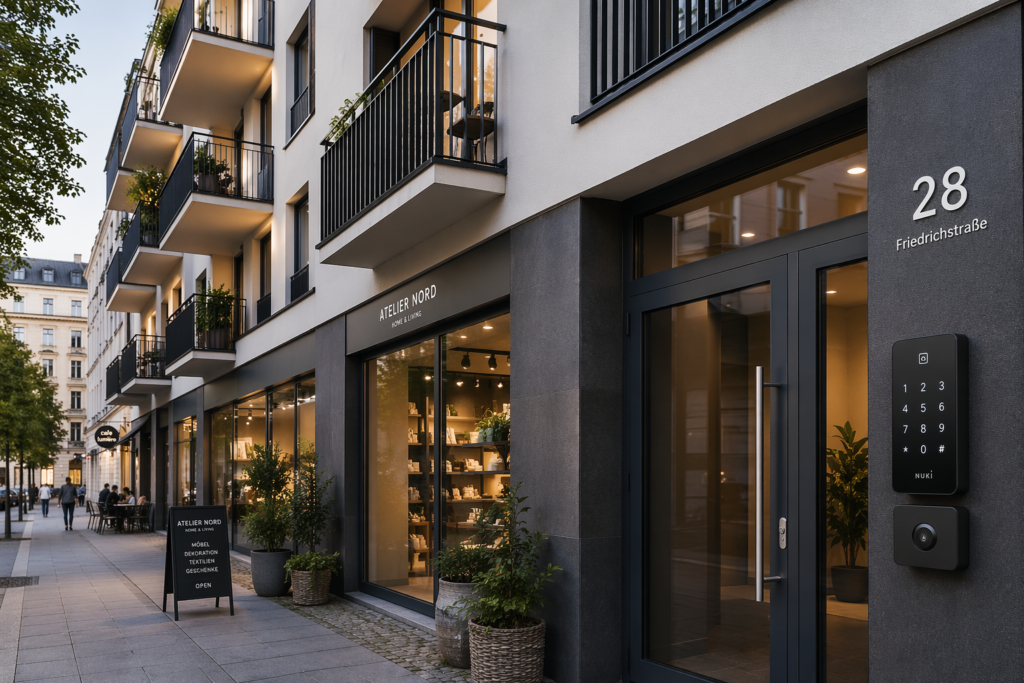
Across Europe, property portfolios rarely fit neatly into one category. A single building — or brand — might span long-term residential units, short-term rentals, serviced apartments, and even commercial or retail spaces. This blend creates opportunity, but it also introduces operational complexity that traditional access control systems weren’t designed to handle.
For operators managing mixed-use environments, the question isn’t just how to secure doors. It’s how to unify access across tenancy types, workflows, and regulatory requirements — without slowing teams down or fragmenting the tech stack.
The challenge of mixed-use complexity
In a mixed-use property, access needs vary widely depending on who’s coming through the door.
A long-term resident expects persistent access to their unit, common areas, and amenities. A short-term guest needs temporary, time-bound access that aligns precisely with check-in and check-out. A retail tenant may require business-hour access for staff, plus after-hours entry for cleaning crews or deliveries. Meanwhile, maintenance teams, vendors, and property staff all need access that’s role-based, scheduled, and auditable.
Multiply this across dozens — or hundreds — of properties in different countries, and the complexity grows quickly. Many European operators end up juggling multiple systems to manage these overlapping use cases, and the differences between boutique hotels and vacation rentals only add another layer.
The result is familiar: duplicated effort, inconsistent experiences, and increased risk.
One platform, multiple tenancy models
A unified access control platform changes this equation by acting as a shared layer across every part of the portfolio.
Rather than managing residential, hospitality, and commercial access separately, operators can centralize control in a single dashboard that maps access to real-world events. When a lease begins, a resident is granted ongoing access. When a guest booking is confirmed, credentials are automatically generated and set to expire at checkout. When a vendor is scheduled, temporary access is issued for a defined window.
This approach removes the need for manual key handoffs or code sharing and replaces it with automation tied directly to property workflows. Instead of treating each tenancy type as a separate process, access becomes a consistent, scalable function across them all.
Connecting systems instead of replacing them
One of the biggest challenges in Europe is the diversity of technology already in place. Property managers often rely on different property management systems, booking tools, and operational software depending on asset type or market.
A modern access platform doesn’t force standardization. Instead, it integrates with the systems already in use.
By connecting access control to platforms like hospitality PMS, leasing systems, and operational tools, access can be automated based on existing workflows. Guest check-ins trigger credentials. Lease expirations revoke them. Maintenance schedules grant temporary entry. European operators are already seeing the benefits of this kind of connected, platform-first approach.
In mixed-use environments, this flexibility is critical. It allows operators to unify access without disrupting the way each part of the business already runs.
Supporting GDPR and regional compliance
In Europe, access control isn’t just an operational concern — it’s a compliance one.
Property operators must ensure that access to buildings and units is not only secure, but also traceable and managed in accordance with data protection standards like GDPR. That means clear records of who accessed what, when, and under what permissions, along with the ability to adjust or revoke access as circumstances change.
A centralized access platform supports these requirements in several key ways. Every access event is logged, creating a clear audit trail for internal oversight and external compliance. Credentials can be restricted to specific dates and times, reducing unnecessary exposure. Different users — residents, guests, staff, vendors — receive only the access they need, and permissions can be updated or revoked instantly across multiple properties.
This structured approach replaces ad hoc methods like physical keys or spreadsheets with a system that is inherently more transparent and manageable — helping operators meet regulatory expectations without adding administrative burden. In the UK, where new registration rules for short-term rentals are taking shape, having this kind of infrastructure in place will be especially important.
Adapting to local expectations across Europe
European markets are far from uniform. In some regions, mobile credentials are becoming the norm. In others, PIN codes or offline credentials are still preferred due to building infrastructure or user expectations.
A flexible access platform accommodates these differences by supporting multiple credential types across the same portfolio. Whether it’s mobile credentials, PINs, or card access, operators can tailor experiences at the property level while maintaining centralized oversight.
This flexibility is especially important in mixed-use properties, where different tenancy types may require different access methods within the same building. The UK short-term rental market, for example, is increasingly leaning toward smart, connected tech that supports both guest convenience and operational efficiency.
Scaling without fragmentation
As portfolios grow — across cities, countries, and asset types — the limitations of disconnected systems become more pronounced.
A unified access layer allows operators to scale without rebuilding their infrastructure at every new property. Instead of introducing new tools for each expansion, access remains consistent, even as underlying systems, hardware, and regulations vary.
That means standardized access workflows across diverse property types, centralized visibility into access activity across regions, and the ability to adapt to local requirements without creating silos. For operators looking to grow their portfolios without growing their teams, this balance between consistency and flexibility is what enables sustainable expansion.
The bigger picture: access as infrastructure
In mixed-use environments, access control is no longer just a security function. It’s a core part of how properties operate.
When access is unified across tenancy types, integrated with operational systems, and aligned with compliance requirements, it becomes a foundation that supports the entire portfolio. Teams spend less time coordinating access manually and more time focusing on resident experience, operational efficiency, and growth.
For European property managers navigating the realities of mixed-use portfolios, the goal isn’t to simplify the business model — it’s to simplify how it’s managed. A single access control platform makes that possible.
RemoteLock
Advanced Access Control and More
RemoteLock has been automating access control and improving on-site property operations efficiencies across multiple industries, including vacation rental and multifamily, for more than ten years. As a leading access-centered property operations software platform provider with more than 10,000 customers in 75+ countries, RemoteLock helps property managers enable, control, and automate access and climate control across their portfolio. RemoteLock’s platform saves property managers time and money through the elimination of tasks for onsite staff and helps scale businesses with greater confidence. It is differentiated by its dozens of integrations with applicable hardware and business software systems for an easy-to-use, turn-key solution.