How UK Short-Term rental operators can stay ahead of new registration rules



A guest arrives late to a flat in Manchester after a delayed train. They’re tired, it’s raining, and all they want is a smooth check-in. The door opens instantly with a code that works. Inside, everything is ready.
Behind that simple moment is a growing amount of operational complexity.
Across the UK, short-term rental operators are entering a new regulatory environment. England’s upcoming national registration scheme will require every property to be registered, with platforms like Airbnb and Booking.com expected to block unregistered listings. Operators will need to provide documentation proving safety compliance and maintain clear records of how their properties are used.
This shift comes as the market itself becomes more competitive and more professional. The UK now has more than 375,000 active short-term rental listings, and supply has continued to grow year over year. In this environment, staying compliant isn’t just about avoiding penalties. It’s about operating in a way that builds trust with both guests and regulators.
What’s changing in the UK short-term rental market
The most significant change is the introduction of a national registration scheme for short-term lets in England.
While the exact launch date is still pending, the core structure is clear. Every short-term rental property will need to be registered on a government-run system and assigned a unique registration number. That number must be displayed on listing platforms, and properties without one may be removed entirely.
Registration will also require proof of compliance with existing safety standards, including fire safety, gas safety, and insurance documentation. Operators who fail to comply could face civil penalties of up to £5,000.
At a policy level, the goal is visibility. The UK government has been clear that a national register will give local authorities better data on short-term rental activity and help enforce existing rules more consistently.
That matters in places like London, where the 90-day rule limits how often a property can be rented without planning permission. With better data, councils can enforce those limits far more effectively.
For operators, the takeaway is simple. The days of informal or loosely managed short-term rentals are coming to an end.
Running a sharper multifamily portfolio
Get updates on access automation, turnovers, and resident experience tools built for property teams.
Why compliance is more than a one-time task
It’s easy to think of registration as a one-time administrative step. In reality, it introduces an ongoing operational requirement.
To stay compliant, operators need to be able to:
- Maintain up-to-date safety documentation
- Track how often properties are rented
- Demonstrate who accessed a property and when
- Provide records if requested by local authorities
At the same time, the market itself is becoming more selective. While occupancy has stabilized, professional operators are maintaining performance by improving pricing and operations rather than increasing volume.
In other words, compliance and operational quality are becoming tightly linked.
Operators who can demonstrate consistent processes, accurate records, and strong oversight are better positioned to stand out. Those who rely on manual workflows will find it harder to keep up.
How smart access supports compliance
This is where smart access technology shifts from a convenience to a necessity.
Documenting Guest Activity Automatically
One of the biggest challenges in a regulated environment is maintaining clear records.
With smart access control, every entry and exit is automatically logged. Access events are stored in a centralized system, creating a complete audit trail across all properties.
That kind of visibility is difficult to achieve with physical keys or lockboxes. It also aligns directly with the type of documentation regulators are looking for. It’s the same principle behind how smart locks improve multifamily security.
Controlling access with time-bound credentials
Manual key management introduces risk. Keys can be copied, shared, or never returned.
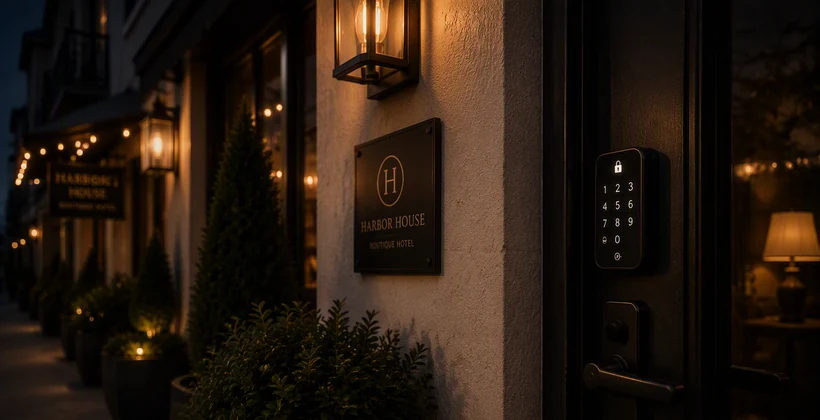
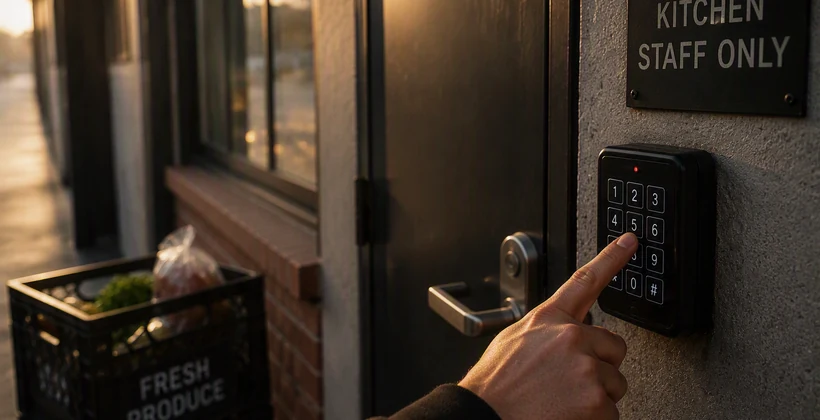
Smart access replaces that with time-bound credentials. Each guest receives a unique code that only works during their stay. When checkout passes, access is automatically revoked.
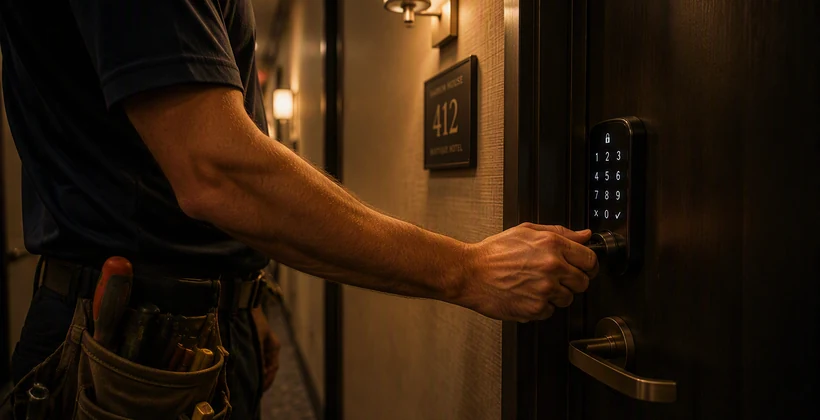
This approach also extends to staff and vendors. Cleaners, maintenance teams, and contractors can be given access only when needed, reducing the risk of unauthorized entry.
For operators managing multiple bookings each week, this removes a layer of manual coordination while improving security.
Centralizing operations across properties
As portfolios grow, complexity increases quickly.
The UK market has added thousands of new listings in recent years, and operators are often managing properties across multiple cities.
Smart access platforms bring those operations into a single dashboard. Access permissions, device status, and activity logs can all be managed in one place. This is the same shift described in how vacation rental operators simplify turnovers at scale.
Connecting access to booking systems
Another key piece of compliance is consistency.
When access control is integrated with booking platforms or property management systems, guest data flows automatically. Credentials are created based on reservation details, and access windows align with check-in and check-out times.
This reduces manual data entry and helps ensure records are accurate across systems. It also removes common issues like late code delivery or incorrect access windows, which can impact both compliance and guest experience.
It’s all part of a broader ecosystem that unifies your entire property.
Building credibility in a more regulated market
As registration becomes mandatory, visibility increases.
Authorities will have clearer insight into who is operating short-term rentals and how those properties are managed. At the same time, guests are choosing between more options than ever, with hundreds of thousands of listings across the UK.
In that environment, credibility matters.
Operators who can demonstrate consistent safety compliance, clear access control processes, and reliable guest experiences will stand out. This isn’t just about avoiding fines. It’s about building a reputation as a professional operator in a market that increasingly rewards that approach.
Explore RemoteLock integrations
See the full list of hardware and software partners that connect with RemoteLock.
How to prepare now
The registration scheme may not be live yet, but the direction is clear. Operators who prepare early will have an advantage.
A few practical steps:
- Audit your safety documentation and make sure everything is current
- Move away from physical keys toward digital, trackable access
- Centralize operations across your portfolio
- Ensure your systems can generate and store access records
- Stay up to date with GOV.UK guidance as the scheme develops
Many of these steps also address common operational challenges, like remote access, lost keys, and more.
What UK short-term rental operators need to do now
The UK short-term rental market is entering a more structured phase.
Registration requirements, increased enforcement, and growing competition are all pushing the industry toward more professional operations.
For operators, the opportunity is clear. Those who invest in systems that provide visibility, automation, and control will not only meet new requirements. They’ll be better positioned to run efficient, scalable, and trustworthy businesses in a market that continues to evolve.

RemoteLock has been automating access control and improving on-site property operations efficiencies across multiple industries, including vacation rental and multifamily, for more than ten years. As a leading access-centered property operations software platform provider with more than 10,000 customers in 75+ countries, RemoteLock helps property managers enable, control, and automate access and climate control across their portfolio. RemoteLock’s platform saves property managers time and money through the elimination of tasks for onsite staff and helps scale businesses with greater confidence. It is differentiated by its dozens of integrations with applicable hardware and business software systems for an easy-to-use, turn-key solution.
Access that Works Everywhere
One flexible platform built to support modern properties, no matter who needs access or how your portfolio scales

Interested in learning more?
Explore blogs, webinars, and videos related to what you just read

When the internet drops, your guest still needs to get in
The maintenance request that never gets logged
Access that matches the schedule, not the other way around